
Electromechanical diaphragm dosing pumps are a core component in modern industrial processes that require precise, reliable chemical metering. From water and wastewater treatment to chemical processing, food & beverage utilities, and industrial utilities, these pumps provide controlled, repeatable dosing of liquids across a wide range of flows and pressures.
Dosing pumpsPositive displacementChemical meteringIndustrial applications
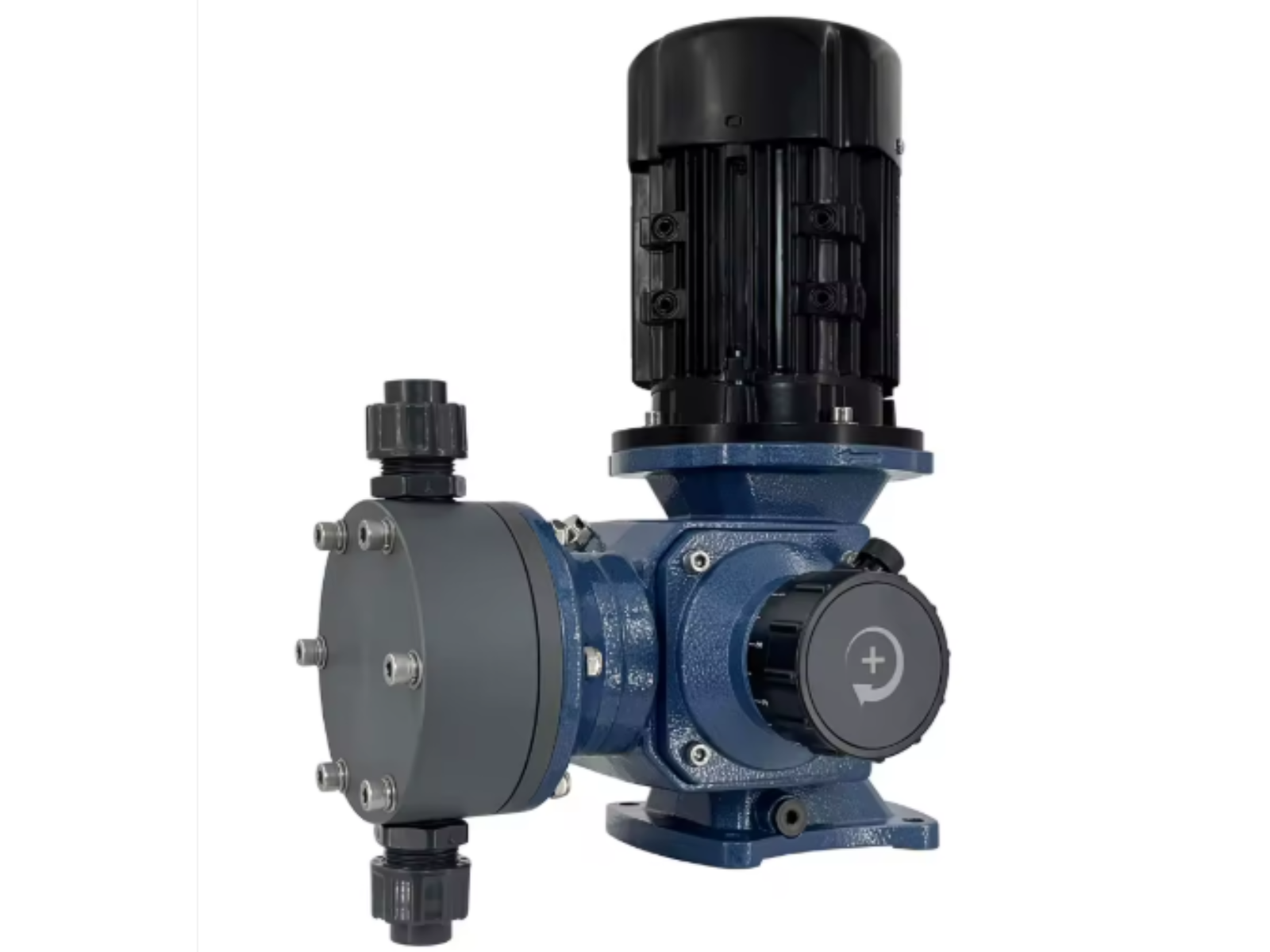
This technical article focuses on electromechanical diaphragm dosing pumps for the U.S. industrial market, explaining how they work, where they are used, and the key factors to consider when specifying them in critical applications.
In this guide
- What Is an Electromechanical Diaphragm Dosing Pump?
- How Electromechanical Diaphragm Dosing Pumps Work
- Advantages of Electromechanical Diaphragm Dosing Pumps
- Typical Applications
- Comparing to Other Dosing Technologies
- Key Technical Parameters for Specifying
- Installation and System Design Considerations
- Engineering Support and Supplier Selection
- Conclusion
What Is an Electromechanical Diaphragm Dosing Pump?
An electromechanical diaphragm dosing pump is a positive displacement pump that uses a flexible diaphragm driven by a mechanical actuation system—typically a motor, gearbox, and eccentric or cam mechanism—to deliver precise, metered volumes of liquid.
Each stroke of the diaphragm displaces a defined volume of fluid from the pump head. Stroke length and/or stroke frequency can be adjusted to control the dosing rate.
Key characteristics
- Positive displacement: Delivers a defined volume per stroke
- Electromechanical drive: Motor + gear reduction + crank/eccentric drive the diaphragm
- Flexible diaphragm: Separates the process fluid from the drive components
- Adjustable capacity: Flow can be tuned via stroke length and/or stroke frequency
- Suitable for a wide range of pressures and viscosities
How Electromechanical Diaphragm Dosing Pumps Work
Electromechanical diaphragm dosing pumps operate in a reciprocating cycle consisting of two main phases: suction and discharge.
Suction Stroke
- The diaphragm retracts, increasing the volume in the pump head.
- The suction (inlet) check valve opens as fluid is drawn into the chamber.
- The discharge (outlet) check valve remains closed to prevent backflow.
Discharge Stroke
- The diaphragm moves forward, reducing the volume in the pump head.
- The suction valve closes.
- The discharge valve opens, forcing the metered volume of fluid into the discharge line.
This cycle repeats at a frequency determined by the motor speed and drive mechanism. The stroke length and stroke frequency can be adjusted to achieve the desired dosing rate.
Advantages of Electromechanical Diaphragm Dosing Pumps
Electromechanical diaphragm dosing pumps are widely used because they provide a robust balance of accuracy, reliability, and cost-effectiveness for chemical dosing.
1) Accurate and Repeatable Dosing
- Positive displacement design provides consistent volume per stroke.
- Flow remains stable across a range of discharge pressures when properly sized.
- Suitable for applications where precise chemical ratios and setpoints are critical.
2) Excellent Chemical Compatibility
The diaphragm and wetted parts can be selected in materials compatible with acids and alkalis, coagulants and flocculants, disinfectants and oxidants, and a wide range of process chemicals and additives—supporting use across multiple industrial sectors.
3) Pressure Capability
- Capable of operating at significant discharge pressures compared to many centrifugal solutions used in dosing.
- Commonly used for injection into pressurized lines, reactors, and distribution manifolds.
4) Reliability and Serviceability
- Mechanically simple and robust design.
- Diaphragms are designed for long life, and many models include features such as overload protection and stroke adjustment mechanisms.
- Maintenance is typically predictable and can be scheduled around plant operations.
5) Drive-End Isolation
- The diaphragm isolates the process fluid from the drive end.
- Helps protect drive components from corrosion and contamination.
Typical Applications for Electromechanical Diaphragm Dosing Pumps
Electromechanical diaphragm dosing pumps are used across a wide range of industries for metered injection of chemicals, including:
Water and Wastewater Treatment
Dosing of:
- Coagulants (e.g., alum, ferric chloride)
- Flocculants and polymers
- pH adjustment chemicals (acids and caustics)
- Disinfectants (e.g., sodium hypochlorite)
- Corrosion and scale inhibitors
Applications include:
- Municipal water treatment plants
- Industrial wastewater treatment systems
- Cooling tower and boiler water treatment
Chemical Processing
- Precise dosing of process additives and reagents
- Catalyst dosing and inhibitor addition
- Metered feed of reactants into batch or continuous systems
Food & Beverage Utilities (Non-Product Contact)
- CIP (Clean-in-Place) chemical dosing
- Boiler and cooling water treatment
- Wastewater and effluent treatment related to production facilities
Pulp & Paper, Mining, and Other Industries
- Dosing of bleaching agents, process chemicals, and treatment additives
- Reagent dosing in mineral processing streams
- Neutralization and conditioning chemicals in various process streams
Comparing Electromechanical Diaphragm Pumps to Other Dosing Technologies
When selecting a dosing pump, engineers often compare electromechanical diaphragm designs to solenoid-driven diaphragm pumps, peristaltic (hose) pumps, and gear or progressive cavity pumps.
Electromechanical vs. Solenoid Diaphragm Pumps
- Electromechanical: Typically handles higher flows and pressures; better suited for continuous, heavy-duty industrial service; smooth mechanical drive and robust construction.
- Solenoid: Excellent for small flows and compact installations; highly responsive for low-flow, low-pressure applications; often selected for light-duty or small-volume dosing.
Electromechanical vs. Peristaltic Pumps
- Electromechanical diaphragm: Common choice for clean fluids or lightly contaminated chemicals; lower operating costs in many medium-to-high pressure applications; stable dosing accuracy with proper check valves and piping design.
- Peristaltic: Good for slurries or fluids with solids; tube is the main wear item and can require frequent replacements; suited for short runs or where solids or gas content are a concern.
Key Technical Parameters for Specifying an Electromechanical Diaphragm Dosing Pump
To correctly size and select an electromechanical diaphragm dosing pump, the following information is essential:
Fluid Characteristics
- Chemical identity and concentration
- Temperature (minimum, normal, maximum)
- Viscosity at operating temperature
- Specific gravity
- Presence of solids, gas, or particulate matter
Flow Rate
- Required minimum, normal, and maximum dosing rates
- Units in GPH, GPM, L/h, or mL/min as appropriate
- Whether the pump must be adjustable across a defined turndown ratio
Discharge Pressure and System Backpressure
- Maximum discharge pressure (including static and dynamic components)
- Line pressure at the injection point
- Need for pressure relief or backpressure valves
Suction Conditions
- Fluid level relative to pump (flooded suction vs. suction lift)
- Suction line length, diameter, and number of fittings
- NPSH considerations (if applicable)
Control and Integration
- Required control method (manual stroke adjustment, 4–20 mA, digital input, pulse input)
- Need for integration into PLC/SCADA systems
Materials of Construction
- Pump head material (compatible with the chemical and temperature)
- Diaphragm and valve materials (e.g., PTFE, EPDM, FKM, etc.)
- Connection types and standards (NPT, BSP, flanged, etc.)
Installation and System Design Considerations
Proper system design and installation are critical to achieving reliable performance from electromechanical diaphragm dosing pumps.
Best practices include
- Piping layout: Minimize suction line length; avoid unnecessary elbows and restrictions; size piping to reduce suction-side friction losses.
- Valves and accessories: Install isolation valves; use dosing check valves; consider backpressure valves and pulsation dampeners where needed.
- Priming and startup: Prime the pump head; vent air per manufacturer guidance; verify suction conditions before operation.
- Instrumentation and protection: Add pressure gauges where appropriate; use tank level switches and interlocks to prevent running dry; include relief protection in high-pressure systems.
Benefits of Partnering With an Engineering-Focused Supplier
Because diaphragm dosing pumps are often used in critical process and water treatment applications, it is important to work with a supplier who can provide engineering support, not just hardware.
An engineering-focused supplier should
- Review fluid properties, temperature, viscosity, and concentration
- Confirm compatibility of materials for pump head, diaphragm, and valves
- Size the pump based on required flow rate, discharge pressure, and turndown range
- Provide performance curves and recommended operating ranges
- Advise on piping layout, valve selection, and system integration
- Support commissioning, troubleshooting, and optimization after installation
Conclusion
Electromechanical diaphragm dosing pumps provide a robust, accurate, and reliable solution for chemical dosing in a wide range of industrial applications. Their positive displacement design, flexible material options, and strong pressure capabilities make them ideal for critical processes in water and wastewater treatment, chemical processing, food & beverage utilities, and beyond.
By carefully defining process conditions, selecting appropriate materials of construction, and integrating the pump into a properly designed dosing system, industrial operators can achieve:
- Highly accurate and repeatable dosing
- Extended equipment life and reduced downtime
- Improved safety and environmental performance
- Lower total cost of ownership over the lifecycle of the system
Need help selecting a dosing pump for your application?
Share your process details—chemical, concentration, temperature, viscosity, target flow rate, discharge pressure, and duty cycle—and our engineering team will recommend the optimal configuration within 24 hours.