
Electric drum pumps are the workhorses of modern fluid handling, enabling safe and efficient transfer of chemicals from 200 L / 55-gallon drums, IBCs, and small tanks into process lines, day tanks, and dosing systems.
When working with corrosive, viscous, or flammable media, the choice of pump design, construction materials, and motor configuration directly impacts uptime, operator safety, and total operating cost.
This technical article focuses on industrial electric drum pumps for the U.S. market, including high-speed units, high-viscosity versions, PP, PVDF, and PTFE tube materials, variable-speed models, and explosion-proof configurations.
What Is an Electric Drum Pump?
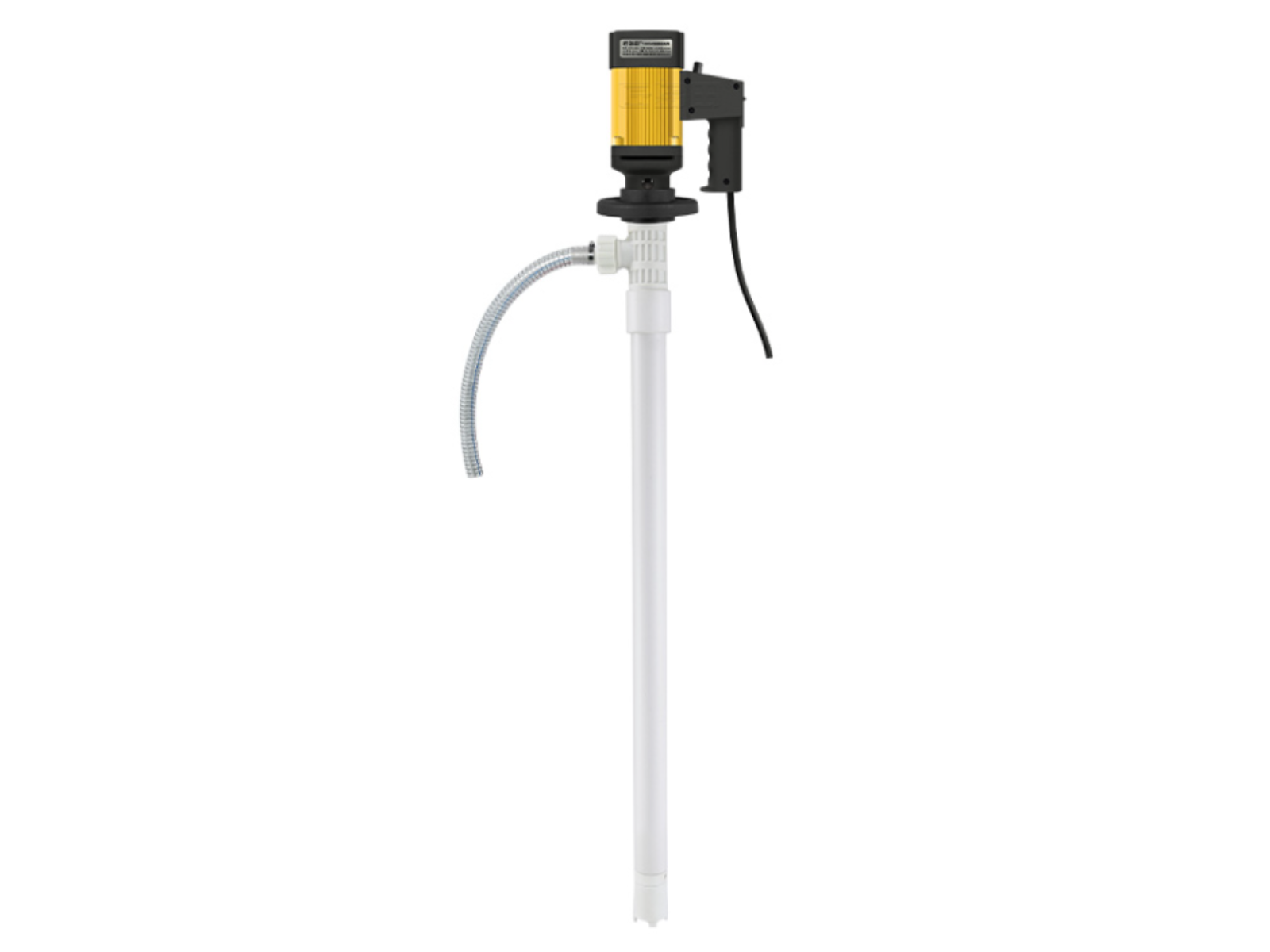
An electric drum pump is a portable pumping system designed to safely transfer liquids from drums, totes, and small bulk containers. A typical system consists of:
- An electric motor (standard, high-torque, or explosion-proof)
- A pump tube (PP, PVDF, or PTFE-lined) inserted into the container
- An impeller or rotor at the bottom of the tube
- A discharge outlet for hoses or rigid piping
Overview of Power Ranges and Performance
600–750 W Standard Electric Drum Pumps
- Flow: approx. 80–100 L/min
- Lift: approx. 5–12 m
- Ideal for low- to medium-viscosity liquids
1000–1800 W High-Viscosity Drum Pumps
- Flow: approx. 95–150 L/min (application dependent)
- Higher torque for viscous fluids and longer discharge lines
Variable-Speed, Anti-Corrosion Drum Pumps
- Flow control: 0–100 L/min
- Used where precise flow adjustment is required
Explosion-Proof Drum Pumps
- Designed for flammable liquids and hazardous areas
- Typically supplied with PVDF tubes
Materials of Construction
Polypropylene (PP)
- Cost-effective with broad chemical resistance
- Suitable for many acids, bases, and industrial chemicals
PVDF
- Higher resistance to strong acids, oxidizers, and solvents
- Lower permeation and higher temperature capability
PTFE
- Maximum chemical inertness
- Used where PP or PVDF are not sufficient
Typical Industrial Applications
- Water and wastewater treatment chemicals
- Chemical processing and blending
- Surface treatment and metal finishing
- Food & beverage utilities (non-product contact)
- Mining, maintenance, and industrial utilities
Key Technical Parameters for Specification
- Chemical name, concentration, viscosity, and temperature
- Required flow rate and transfer time
- Container size and immersion depth
- Material compatibility (PP, PVDF, PTFE)
- Motor type: standard, variable-speed, or explosion-proof
Conclusion
Industrial electric drum pumps provide a safe, efficient, and ergonomic solution for transferring chemicals from drums and IBCs into industrial processes. With proper selection of power rating, materials, and safety features, drum pumps help reduce spills, improve operator safety, and ensure reliable day-to-day operation.
Clearly defining your fluid properties, container type, required flow, and safety requirements ensures that the selected drum pump configuration delivers long-term, dependable service in demanding industrial environments.