
Magnetic centrifugal pumps in polypropylene (PP) and PVDF have become a standard solution for safe, leak-free handling of corrosive and hazardous liquids. For facilities that move aggressive chemicals every day—acids, alkalis, solvents, and chemically loaded process streams—material selection and sealing technology directly influence safety, uptime, and lifecycle cost.
Magnetic drive pumpsPP & PVDF materialsSealless chemical transferIndustrial pump sizing
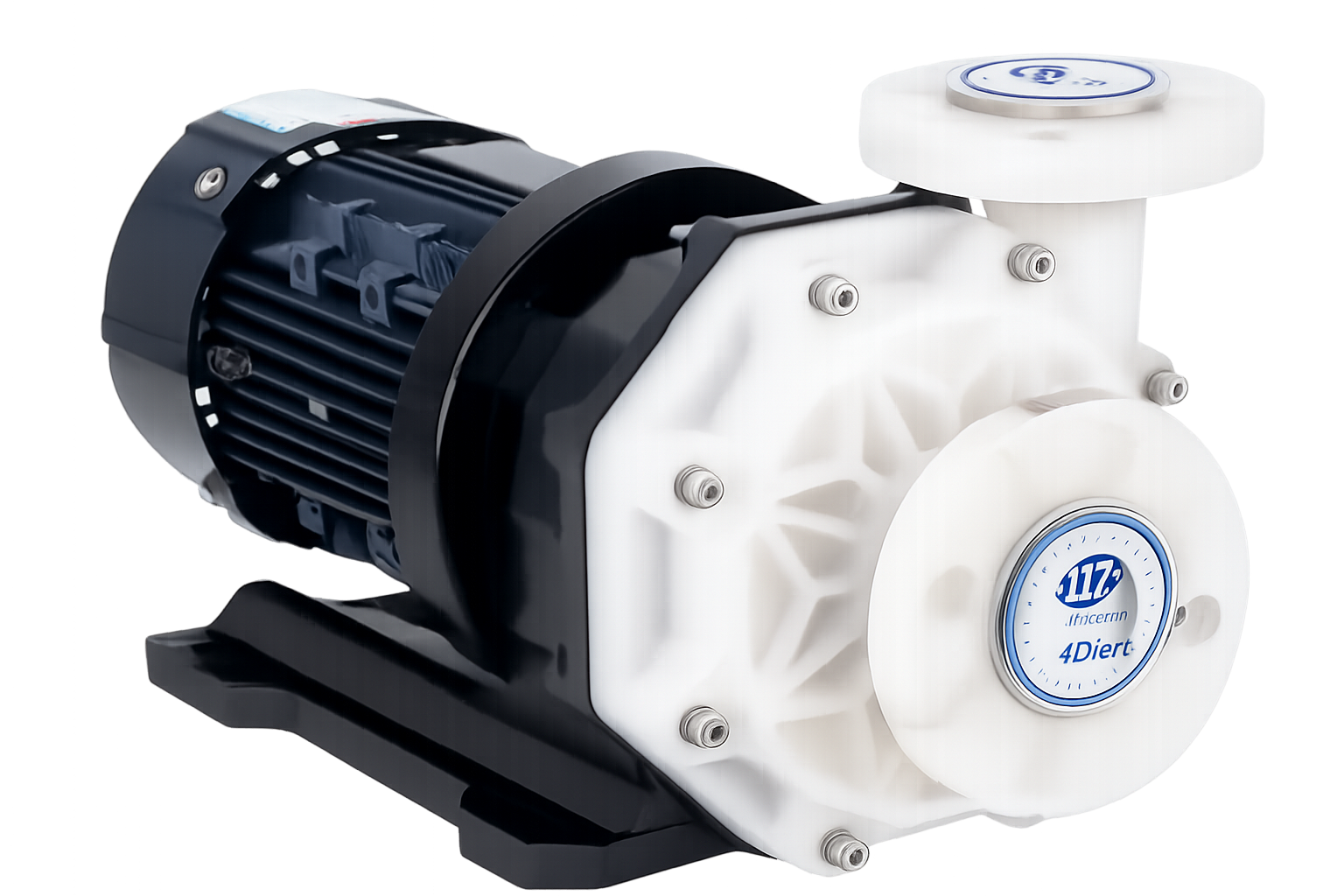
This article provides a technical, SEO-focused overview of magnetic centrifugal pumps in PP and PVDF for the U.S. market, explaining where they fit, how they work, and key considerations for specifying them in industrial applications.
In this guide
- What Is a Magnetic Centrifugal Pump?
- Why Polypropylene (PP) and PVDF for Magnetic Drive Pumps?
- Magnetic Drive vs. Mechanically Sealed Centrifugal Pumps
- Typical Industrial Applications
- Key Technical Considerations When Specifying
- Integrating Pumps into Skids and Systems
- Working With an Engineering-Focused Pump Supplier
- Conclusion
What Is a Magnetic Centrifugal Pump?
A magnetic centrifugal pump is a sealless pump in which torque is transmitted from the motor to the impeller through a magnetic coupling, rather than a mechanical shaft seal. The pumped liquid is fully contained inside a static containment shell, eliminating the dynamic seal that is typically the weakest link in traditional centrifugal pump designs.
Key characteristics
- Sealless construction: No mechanical shaft seal, no stuffing box.
- Magnetic drive: Outer magnet (connected to the motor) drives an inner magnet (connected to the impeller) through a non-metallic containment shell.
- Leak-free operation: Greatly reduces the risk of fugitive emissions and chemical leaks.
- Ideal for corrosive and hazardous fluids: Especially when combined with chemically resistant thermoplastics like PP and PVDF.
Why Polypropylene (PP) and PVDF for Magnetic Drive Pumps?
The choice of construction material is critical for chemical compatibility, mechanical strength, and temperature resistance.
Polypropylene (PP)
Polypropylene is widely used for chemical transfer pumps due to its balance of cost, chemical resistance, and mechanical properties.
Typical advantages of PP
- Excellent resistance to a broad range of acids, alkalis, and salts
- Cost-effective versus high-performance fluoropolymers
- Good mechanical strength for low to medium pressure systems
- Suitable for many ambient- to moderate-temperature applications
Typical applications for PP magnetic pumps
- Chemical dosing and transfer in water and wastewater treatment
- Fertilizer and agricultural chemicals
- General industrial chemical circulation and transfer
- Cleaning and surface treatment baths with compatible media
PVDF (Polyvinylidene Fluoride)
PVDF offers higher performance than PP in terms of chemical and temperature resistance, making it suitable for more aggressive process environments.
Typical advantages of PVDF
- Outstanding resistance to strong acids, oxidizing agents, and many organic solvents
- Higher temperature capability compared to PP
- Better resistance to permeation and stress cracking
- Suitable for demanding applications where PP may not be adequate
Typical applications for PVDF magnetic pumps
- Highly corrosive acid transfer (e.g., HCl, H2SO4 within compatibility limits)
- Chemical processing lines in the chemical and petrochemical industries
- Semiconductor and electronics wet processes (where material purity matters)
- Highly aggressive cleaning and pickling baths
Magnetic Drive vs. Mechanically Sealed Centrifugal Pumps
When selecting a centrifugal pump for chemical transfer, the main decision is often between mechanically sealed and magnetic drive (sealless) designs.
Advantages of Magnetic Drive Pumps
- Leak-Free Operation: No dynamic shaft seal means substantially reduced risk of chemical leakage; supports compliance with environmental and safety regulations related to emissions and exposure.
- Reduced Maintenance: No mechanical seal to adjust, cool, or replace; fewer failure modes related to dry running, misalignment, or contamination of seal faces.
- Improved Safety: Ideal for toxic, corrosive, or environmentally hazardous fluids; minimizes operator exposure during normal operation.
- Lower Lifetime Cost in Many Applications: Higher upfront cost is often offset by reduced downtime, fewer spare parts, and avoided environmental incidents.
Considerations and Limitations
- Dry Running: Standard magnetic drive pumps typically must not run dry. The pumped liquid cools and lubricates internal components.
- Solids Handling: High solids content can cause wear or blockage; filtration or strainers may be required.
- Viscosity: Very high-viscosity fluids may exceed the range where centrifugal designs are efficient.
Typical Industrial Applications for PP and PVDF Magnetic Centrifugal Pumps
Magnetic centrifugal pumps in polypropylene and PVDF are suited for:
Water & Wastewater Treatment
- Transfer of coagulants, flocculants, pH adjustment chemicals, disinfectants
- Recirculation of chemical solutions in dosing skids and treatment lines
Chemical Processing
- Transfer and circulation of corrosive feedstocks, intermediates, and finished chemicals
- Loading and unloading of tanks, reactors, and day tanks
Surface Treatment & Metal Finishing
- Acid pickling baths
- Electroplating and anodizing processes
- Rinse and cleaning baths with aggressive chemistries
Food & Beverage Utilities (Non-Product Contact)
- CIP and SIP chemical transfer (when materials are compatible)
- Boiler and cooling water treatment systems
Mining & Mineral Processing
- Transfer of reagents and treatment chemicals with corrosive profiles
Key Technical Considerations When Specifying a Magnetic Centrifugal Pump
To correctly size and select a PP or PVDF magnetic centrifugal pump, it is important to define the process conditions clearly. At minimum, engineering decisions should be based on:
Fluid Properties
- Chemical identity / mixture
- Temperature (min/max)
- Density and viscosity
- Solids content and particle size (if any)
Operating Conditions
- Required flow rate (GPM or L/h)
- Total dynamic head (TDH) — including static lift, friction losses, and system backpressure
- Operating mode: continuous, intermittent, batch, or cycling
- NPSH available (NPSHa) and suction conditions (flooded suction vs. lift)
Materials and Design
- Choice between PP and PVDF based on chemical compatibility and temperature
- Elastomer and secondary material compatibility (seals, o-rings, bushings)
- Required connections (flanged, threaded, ANSI/DIN standards)
Environment & Safety
- Indoor/outdoor installation
- Ambient temperature and ventilation
- Hazardous area classification (if applicable)
- Requirements for secondary containment, leak detection, or monitoring
Maintenance and Lifecycle
- Accessibility for inspection and replacement of wetted parts
- Availability of spare parts and technical support
- Expected runtime and criticality of the system (backup pumps, redundancy)
Benefits of Using Polypropylene and PVDF Magnetic Pumps in Chemical Transfer Systems
When correctly specified, polypropylene and PVDF magnetic centrifugal pumps offer:
High Corrosion Resistance
- Extended service life in harsh chemical environments
- Reduced risk of sudden failures due to corrosion-related seal damage
Improved Environmental Performance
- Helps comply with tightening regulations on emissions and workplace exposure
- Reduces the potential for spills and cleanup costs
Operational Reliability
- Stable hydraulic performance over time when installed and operated within design limits
- Predictable maintenance intervals, especially when combined with proper filtration and instrumentation
Flexibility Across Applications
- Ability to handle a wide range of chemicals with appropriate material selection
- Modular configurations for different flow and head requirements
Integrating Magnetic Centrifugal Pumps into Skids and Systems
Magnetic centrifugal pumps in PP and PVDF are commonly integrated into:
- Chemical dosing skids
- pH adjustment systems
- CIP and cleaning skids
- Bulk chemical unloading and transfer stations
Best practices for integration include
- Providing adequate straight pipe lengths at suction and discharge where possible
- Ensuring proper alignment and support of piping to limit nozzle loads
- Installing isolation valves and check valves where required by process design
- Including instrumentation (pressure gauges, flow meters, level sensors) to monitor performance and protect the pump
- Implementing interlocks to prevent dry running and operation against closed valves
Working With an Engineering-Focused Pump Supplier
Because magnetic centrifugal pumps in PP and PVDF are used with critical and sometimes hazardous chemicals, technical support from the supplier is often as important as the hardware itself.
An engineering-focused supplier should
- Review your process conditions (fluid, temperature, viscosity, flow, head, duty cycle)
- Confirm material compatibility and temperature limits
- Provide performance curves and recommended operating ranges
- Advise on installation best practices, including suction conditions and NPSH
- Support troubleshooting and optimization after startup
Conclusion
Magnetic centrifugal pumps built in polypropylene and PVDF provide a robust, sealless solution for the safe transfer of corrosive and hazardous liquids. By combining chemically resistant thermoplastic construction with leak-free magnetic drive technology, these pumps help industrial facilities improve safety, reduce maintenance, and extend equipment life.
When selecting a PP or PVDF magnetic centrifugal pump, it is essential to consider the complete process conditions—fluid properties, operating parameters, installation environment, and lifecycle requirements. Partnering with a supplier that offers both engineering support and proven designs ensures that your pumping system will deliver reliable, predictable performance in demanding industrial applications.
Need help sizing a pump for your application?
Share your process details—fluid type, temperature, viscosity, flow rate, total head/pressure, and duty cycle—and our engineering team will recommend the optimal configuration within 24 hours.